


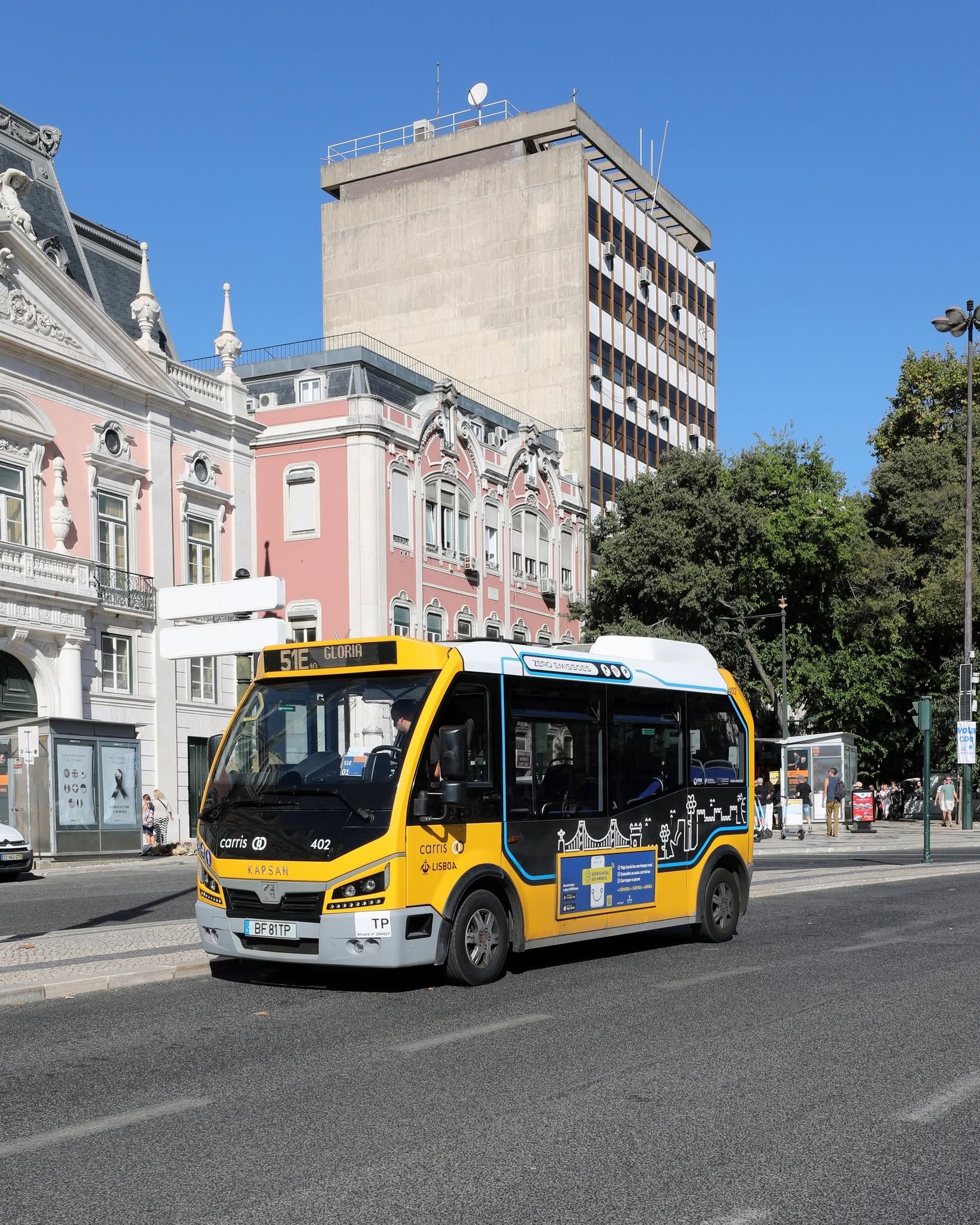
The 29 buses were presented in Belém, in the presence of, among others, the Minister of Housing and Infrastructure, Miguel Pinto Luz, and the Mayor of Lisbon, Carlos Moedas.
For Rui Lopo, the presence of those individuals represents “a commitment” among all to realise the “ambitious plan that Carris has to significantly decarbonise its fleet by 2030, aligned with the strategic options of the Lisbon City Council”.
The president of Carris, a transport company managed by the Lisbon City Council, said that it was a “very demanding” job for the new buses to be in service “next week, at the return from the school term”.
Questioned by journalists on the sidelines of the event about the Government's guarantee that the investment will continue, Rui Lopo stressed that it is not "propaganda", since it is defined in national public policy, not only by the current government but also by previous governments.
"Always optimistic, taking into account the set of variables that we have to know how to work with. The European industry is clearly having difficulties in being able to deliver on time, (...) we don't just go to a corner and buy 30 buses now, and Carris' ambition is to buy 150 per year, and it's not just buying, it's buying and having them in circulation, 150 per year. And therefore, this requires a great capacity for intervention, with suppliers, with the market, (...), but, yes, with total confidence and ambition in achieving this decarbonised process in 2030," said Rui Lopo.
In his speech presenting the new buses, Rui Lopo said that Carris has executed “100% of its PRR”, recalling that it amounts to almost 32 million euros, of which 15 million are from its own budget, which allowed the acquisition of 25 charging stations, 29 minibuses and 49 standard buses since 2022”.
“Carris currently has 103 electric buses and, when these 29 are in operation, more than 50% of our kilometres traveled will be by non-diesel vehicles,” he said, adding that by the end of the year “around 2 million euros will be invested in electrical infrastructure projects for the stations and, in 2027, more than 10 million euros will be invested in infrastructure and information systems for energy management”.
At the ceremony, with the Tagus River as a backdrop and 29 new vehicles lined up in a semicircle, the Minister of Infrastructure and Housing, responsible for mobility, said the government will fund the electric buses left out of the PRR.
The Secretary of State "spoke of around 950 buses; there are a little more, because the Government has a commitment. Those that were unable to remain in the PRR will be funded. So, to be precise, there are 1,006." “There are more than a thousand buses financed between the Government and the European Commission,” said Pinto Luz, referring to the “zero emissions” buses destined for more than 70 municipalities on the continent.
In turn, the Deputy Secretary of State for Energy, Jean Barroca, stressed that with these 29 vehicles, “Carris now has 103 fully electric buses in operation and, of these, 78 were actually financed by the PRR”.
“This year alone, between the 15 minibuses presented in June and the 29 today, there are 16 million euros from the PRR circulating on the streets of this city,” the official exemplified.
Jean Barroca added that those who board these buses next week will have “less noise, less smoke, a more comfortable trip and fewer maintenance setbacks”, stressing that for the city “it also means cleaner air on the streets where people live”.
The Mayor of Lisbon, Carlos Moedas, emphasised that when he took over the presidency of the local authority, “70% of the buses used to run on fossil fuels and today it’s more or less 50%. And the idea (…) is to reach zero fossil fuel consumption by 2030.”
“These buses that are around us, more than just buses, are the concrete reality in public policy for the climate transition and the fight against all carbon emissions,” he said, adding that Carris had 524 diesel buses and that today there are 379.
 Add as a preferred source on Google





 Portugal Handbook
 English
 Nederlands
 Deutsch
 Français
 Español
 Italiano
 Svenska
 Pусский
 中文
中文 Türkçe
 Português
 Czech
Czech Hungarian
 Polski
 عربي
عربي Suomi
Suomi עִברִית
 Português (Brasil)
Follow us on social media