


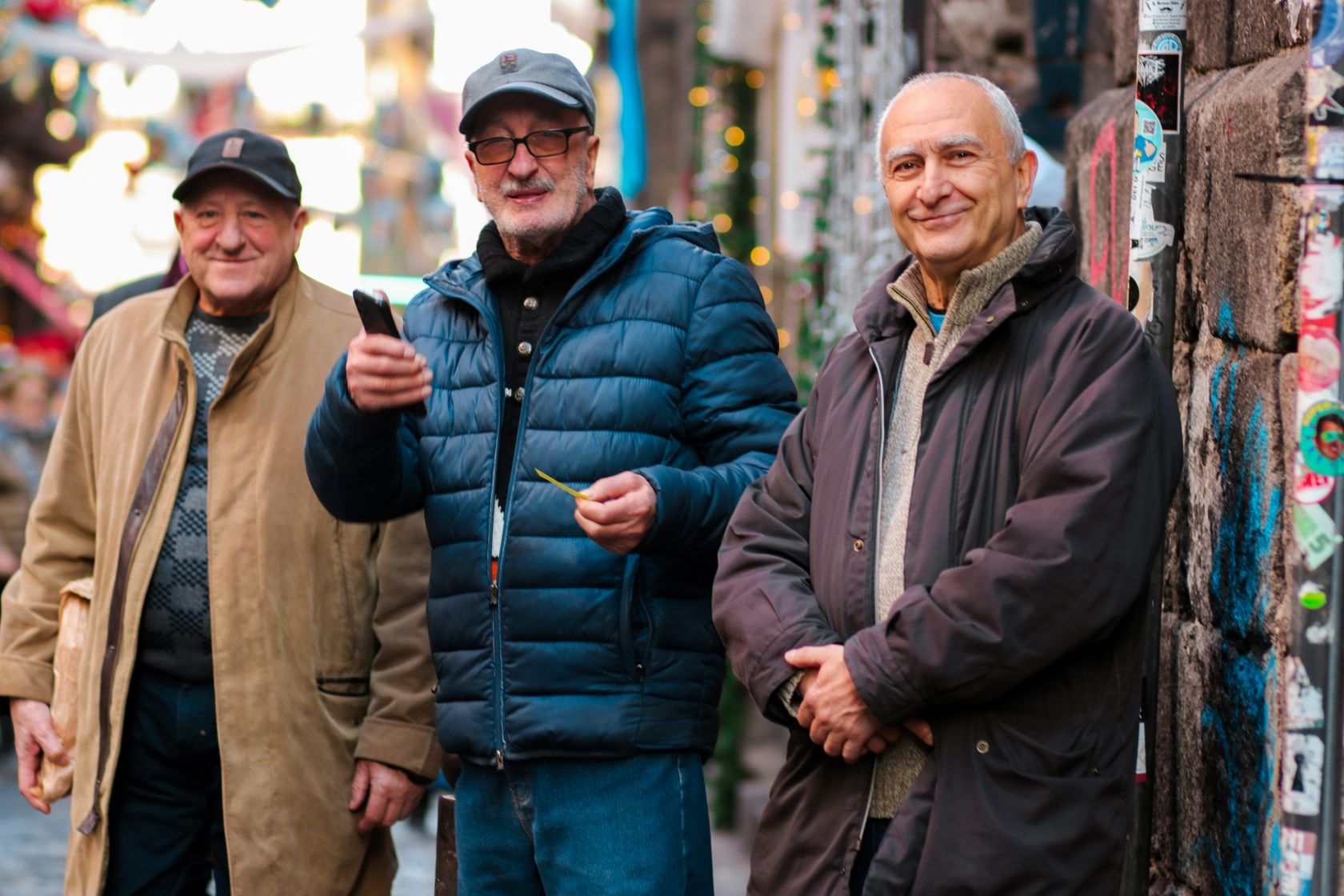
“The idea that you can’t do anything is the first myth people need to get around,” he said. “As far as we can tell, there doesn’t seem to be a point of no return. It’s not too late to start.”
The data backs him up, and it’s more encouraging than you’d expect. A recent review of 85 studies covering more than eight million people found that staying active across adulthood is linked to a 20–40% lower risk of dying early. But the real headline is for the rest of us: people who were inactive and then got moving still cut their risk by 20–25%. The researchers’ own verdict - it’s never too late.
Strength tells the same story. The muscle we assume is gone for good turns out to be remarkably willing to return. Adults who took up resistance training in later life reversed some of the molecular signatures of ageing in their muscles, and people in their nineties regained strength in as little as eight weeks. Fitness keeps paying out, too: in a study of over 120,000 people, higher cardiorespiratory fitness was associated with lower mortality, with no upper threshold observed - and the benefit held for older adults.
Kaeberlein reckons the right habits - diet, movement, sleep, and, he’s careful to add, good friends - could hand the average person as much as 15 healthy years. Not perfect years. Better ones.
The encouraging part is that none of this demands a complete reinvention. A short walk, an earlier night or one better meal is still a move in the right direction.
“You just want to move towards optimal,” he told me. “You don’t have to be perfect.”
So I’m not aiming for perfect. Just a bit better than yesterday. That, it turns out, is the whole game.
Set The Portugal News as your preferred source for news on Google
 Add as a preferred source on Google








 Portugal Handbook
 English
 Nederlands
 Deutsch
 Français
 Español
 Italiano
 Svenska
 Pусский
 中文
中文 Türkçe
 Português
 Czech
Czech Hungarian
 Polski
 عربي
عربي Suomi
Suomi עִברִית
 Português (Brasil)
Follow us on social media